Founders, 1887
- Bishop Dimitrije Pavlović of Niš
- Stevan Nikšić Lala
- Spira Kalik
- Bogoljub Tirić
- Aleksandar Zajček
HomeAbout us
Niš Church Choral Society “Branko”
Since 1887 - the prayerful song of Niš.
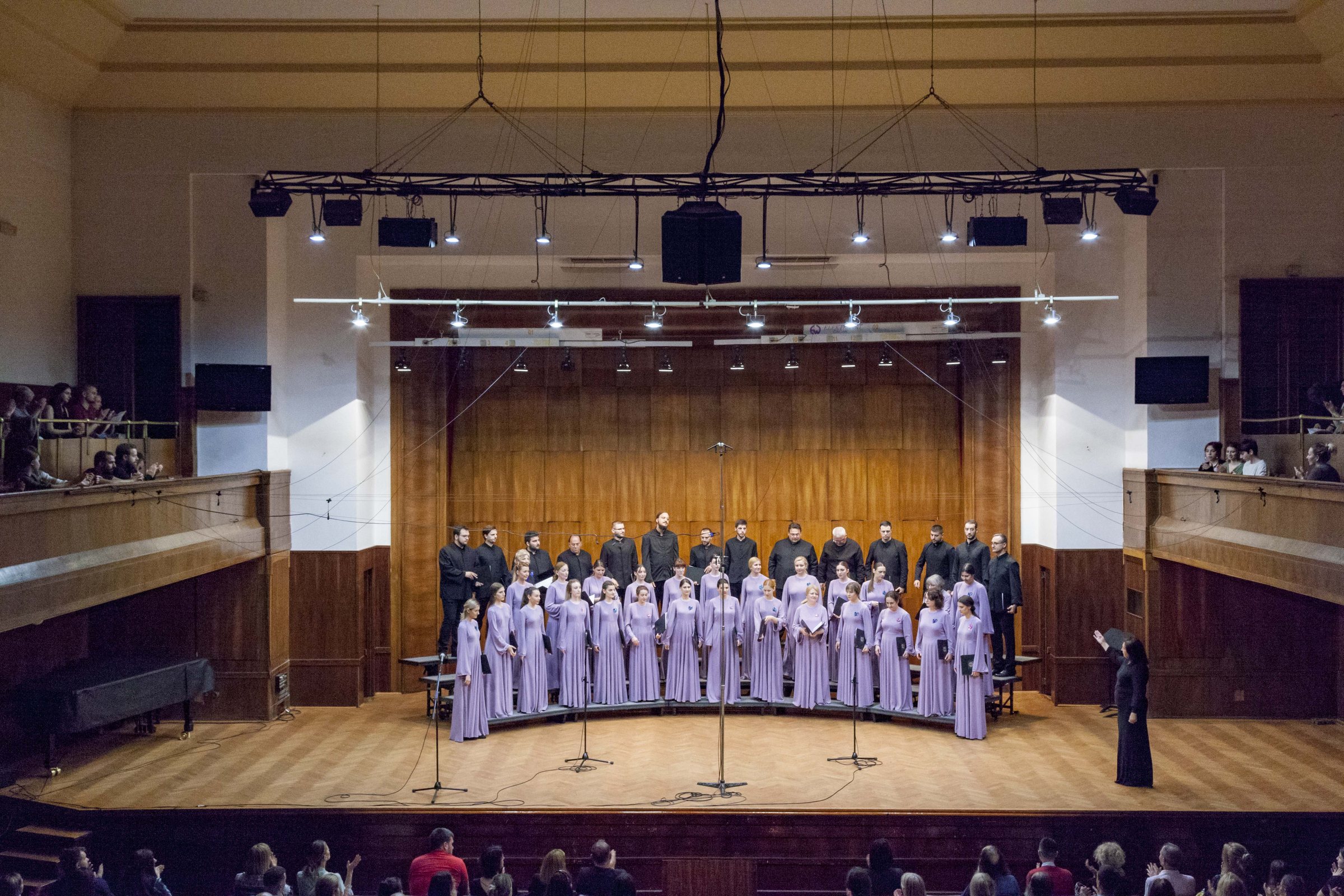
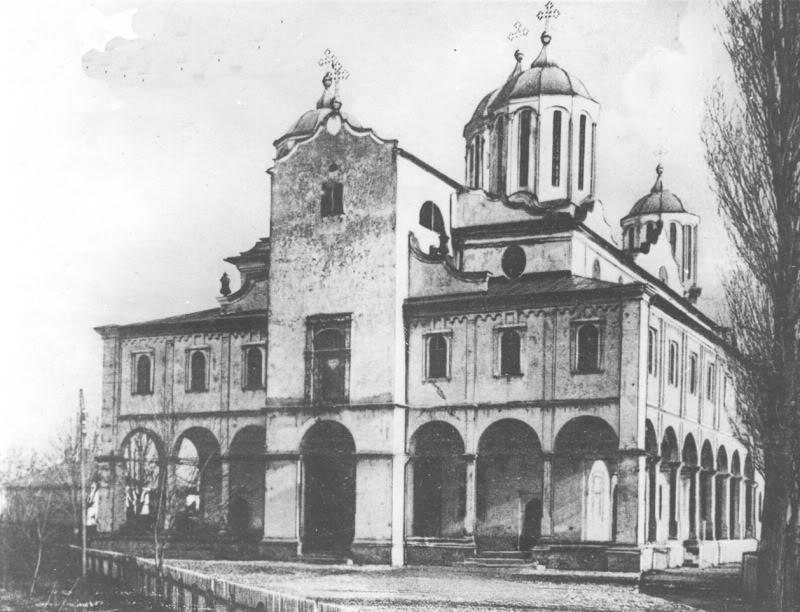
The Niš Church Choral Society “Branko” was founded on 1 September 1887 at the Cathedral in Niš. It was named after Branko Radičević, the celebrated poet of Serbian Romanticism, whose work joyfully celebrates newly won freedom and the unity of the Slavic peoples.
For 139 years, without interruption, “Branko” has taken part in the services of the Cathedral in Niš with its chant, alongside the bishops and clergy of Niš. The joy and responsibility of serving God and their people gave generations of singers and conductors the strength to persevere even in the hardest of times. Through prayerful song they shared the joys and sufferings of their people, preserving faith, fellowship and the unbroken thread of the Society's spiritual life.
This unbroken service lives on in the people who have woven their voices and hearts into “Branko”. Generations have come and gone, and the love of church chant has been passed from older to younger members, together with the awareness that belonging to the Society is both a gift and a responsibility.
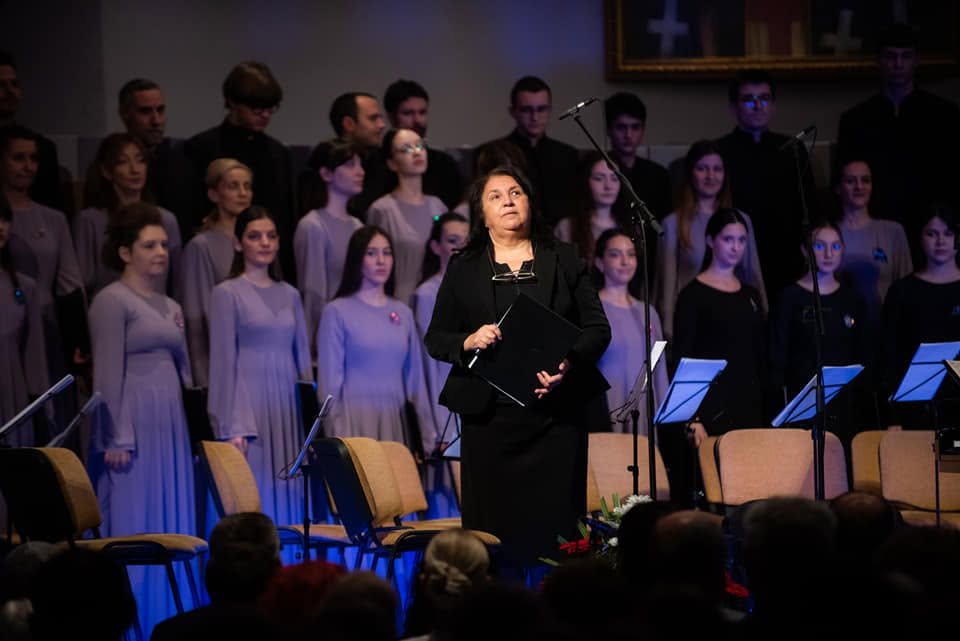
Beneath the vaults of the Cathedral, in common prayer and song, “Branko” continues today what its founders began - gathering people in faith and love and preserving the heritage entrusted to future generations.
Since 1887
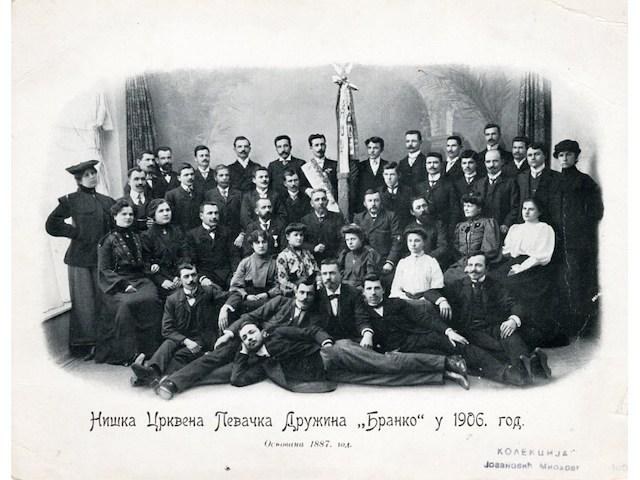
The Niš Church Choral Society “Branko” was founded on 1 September 1887 at the Cathedral in Niš, less than a decade after the city's liberation from the Turks. Its founders included Bishop Dimitrije Pavlović of Niš, mayor Todor Milovanović, professors Stevan Nikšić Lala, Spira Kalik and Bogoljub Tirić, and army doctor Aleksandar Zajček. The Society took the name of Branko Radičević, whose verse and patriotism were close to its mission: to serve the Church through song, preserve national memory and enrich the cultural life of the city.
Originally founded as a male choir, “Branko” grew over time into a mixed ensemble. It brought together people of different professions and social backgrounds, united by their love of faith and music. Members were expected to be “musical and pious”, to cooperate and respect one another. Besides cultivating sacred and secular song, the Society encouraged musical education, solidarity and companionship, and its early conductors included Stevan Nikšić, Bohumil Svoboda, Vojtěch Šístek, Vićentije Petrik and Milutin Tatić...
The centre of the Society's life was the Cathedral. The choir sang regularly at liturgies, feast-day services, weddings, funerals and memorial services. Its repertoire included works by Kornelije Stanković, Stevan Mokranjac and Russian composers, while at concerts it also performed patriotic songs, rukoveti and arrangements of folk melodies. Works dedicated to the choir itself were also written in this setting: Bohumil Svoboda composed the Society's anthem to Branko's verses “Sing, brother, let the mountain ring, with song heal the Serb's wounds”, and in 1891 Vojtěch Šístek wrote the music for the song “Oj, Srbijo”, which soon became very popular.
From its earliest years, “Branko” was an active participant in the public life of Niš. It performed at charity concerts for poor pupils, supported humanitarian and educational undertakings and worked with the “Sinđelić” Theatre. The Society took part in marking important civic and national events, and it was under its auspices that the initiative to protect the Skull Tower (Ćele Kula) and to erect a monument to Stevan Sinđelić on Čegar was launched.
A special place in the choir's history belongs to the unusual “electric concerts” held in 1894 and 1895 between Belgrade and Niš. Thanks to a telephone line, audiences could listen to music from another city - at a time when the telephone was still an almost unknown invention to most people. “Branko” performed from the “Evropa” in Niš, while musicians gathered at the “Kolarac” in Belgrade. Large horns served as loudspeakers and smaller ones as microphones. For the second concert, tickets and postage stamps bearing the image of Nikola Tesla were printed, and he was sent a formal invitation made on silk.
The Society's reputation was also confirmed by its ties with the Serbian royal court. At the consecration of its flag on 1 January 1900, in the presence of King Aleksandar Obrenović, King Milan stood as godfather. The flag and the Society's diploma were designed by Stevan Nikšić, combining the image of Branko Radičević and poetic and musical symbols with motifs of the Cathedral and the Skull Tower.
Cherishing the memory of those who devoted their efforts to the life of the choir, the Society wished to preserve their names permanently in the church where they had sung. At the session of the Society's Board on 17 September 1913, member Jovan Mitić's proposal was accepted to set a marble plaque into the wall of the Cathedral, on which the names of deceased regular members of “Branko” would be inscribed.
The plaque was unveiled and consecrated in December of the same year, as part of the celebrations marking 1600 years of the Edict of Milan. Handing it over to the Church, the president of the Society said:
“The Niš Church Choral Society ‘Branko’ has, from its foundation (1887) to this day - a full 26 years - glorified the Most High Creator with church song in this holy church every Sunday and feast day without interruption. Its members, who with their sweet chant raised the devout souls of Christians to God, have earned that their names remain engraved after death on the memorial plaque which our Society, with the blessing of Your Grace, has erected in the Cathedral of Niš. On behalf of the Society ‘Branko’, entrusting this memorial plaque to your keeping, we ask Your Grace to be so kind as to consecrate it today. May it be a bright memory of our departed members, and for future generations an incentive and an example of how devotedly one should serve God and one's people.”
The Society's last recorded performance before the Bulgarian occupation of Niš was in June 1915, at the patron saint's day of the 16th Infantry Regiment “Tsar Nicholas” in Medoševac. For the beautifully performed concert, Crown Prince Aleksandar Karađorđević presented the choir with a gold coin - a gold napoléon. The board decided that this gift would be the first contribution towards the planned building of a Branko House in Niš.
Thus, already in the first decades, the foundations were laid of what “Branko” has remained throughout its history: a community gathered around the church and song, devoted to faith, art and its people. Between services and concert performances, charitable undertakings and meetings with other choirs, the Society connected people and preserved the memory of those who built it. Each new generation faced the same pledge - to preserve the song received from their predecessors and pass it on.
Generations
The history of the Choral Society “Branko” was shaped not only by concerts and journeys, but above all by the people who built its identity through the generations.
Many choirmasters and musicians have stood at the Society's conductor's stand - from Janićije Popović and Bohumil Svoboda, through Vojtěch Šístek, Vićentije Petrik, Milutin Tatić, Milivoje Pokorni, Veljamin Rudko and others, to Stevan Cincarević and Sara Cincarević, who has led the choir since 1990.
A special place in the Society's history also belongs to its honorary presidents and members. Its honorary presidents included the Bishops of Niš Dositej Vasić and Jovan Ilić, and in 2017, on the occasion of the Society's 130th anniversary, Serbian Patriarch Irinej became its honorary president.
Among the honorary and distinguished members of “Branko” were names belonging to the very summit of Serbian culture: Stevan Stojanović Mokranjac, Josif Marinković, Stanislav Binički, Aleksa Šantić, Branislav Nušić and Vladimir Đorđević.
Founders, 1887
Honorary presidents
Presidents through history
Since its foundation in 1887, many distinguished figures have stood at the conductor's stand of the Niš Church Choral Society “Branko”, shaping the ensemble's artistic development and distinctive sound through their work.
Each generation of conductors has left its mark on the Society's more than century-long tradition, preserving its fundamental mission - nurturing Orthodox sacred music and the Serbian choral tradition.
Throughout its long history, the Niš Church Choral Society “Branko” has gathered around itself some of the most important figures of the Serbian Church, culture, music, literature and public life.
The presence of such distinguished figures among the honorary presidents, members, collaborators and friends of the Society bears witness to the place that the Choral Society “Branko” has held in the spiritual and cultural life of Niš and Serbia for more than a century.
Since its foundation in 1887, “Branko” has remained not only a choral ensemble but also an institution that connects the Church, music, culture and national tradition.
Today
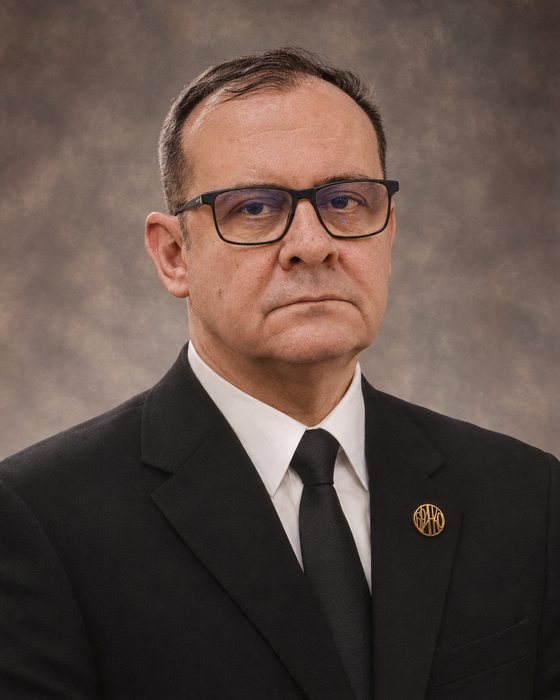
The Society is led by its president Bojan Ilić, while the artistic tradition of the mixed choir and the Children's and Youth Choir is carried on by Sara Cincarević and Jovana Mikić.
The Society's board →Honours
For its artistic, spiritual and cultural contribution, the Choral Society “Branko” has received numerous significant decorations and honours throughout its history.
Among them, a special place belongs to the Order of St Sava, Fourth Class, awarded in 1923 by decree of King Alexander I Karađorđević, the Order of St Sava, Third Class, from the interwar period, the Order of St Sava, Second Class, from 1997 and, finally, the Order of St Sava, First Class, awarded to the Society in 2017 on the occasion of its 130th anniversary.
The choir also holds the Order of the Holy Emperor Constantine and the Gold Medal for Merit of the Republic of Serbia, awarded in 2017 by decree of the President of the Republic of Serbia for special merit and achievements in nurturing the tradition of sacred choral music.
Other significant honours include the “Vojislav Ilić” Award, won at the festival “Choirs among Frescoes”, the “Mokranjac” statuette at the Mokranjac Days in Negotin, and the “11 January” Award, the highest honour of the City of Niš.
A special page in recent history has been written by the Children's and Youth Choir “Branko”, which has won numerous international awards, including the Grand Prix in Romania in 2025 and the Grand Prix in Hajnówka in 2026, and on the occasion of its 30th anniversary was awarded the Order of St Roman of Đunis, First Class.
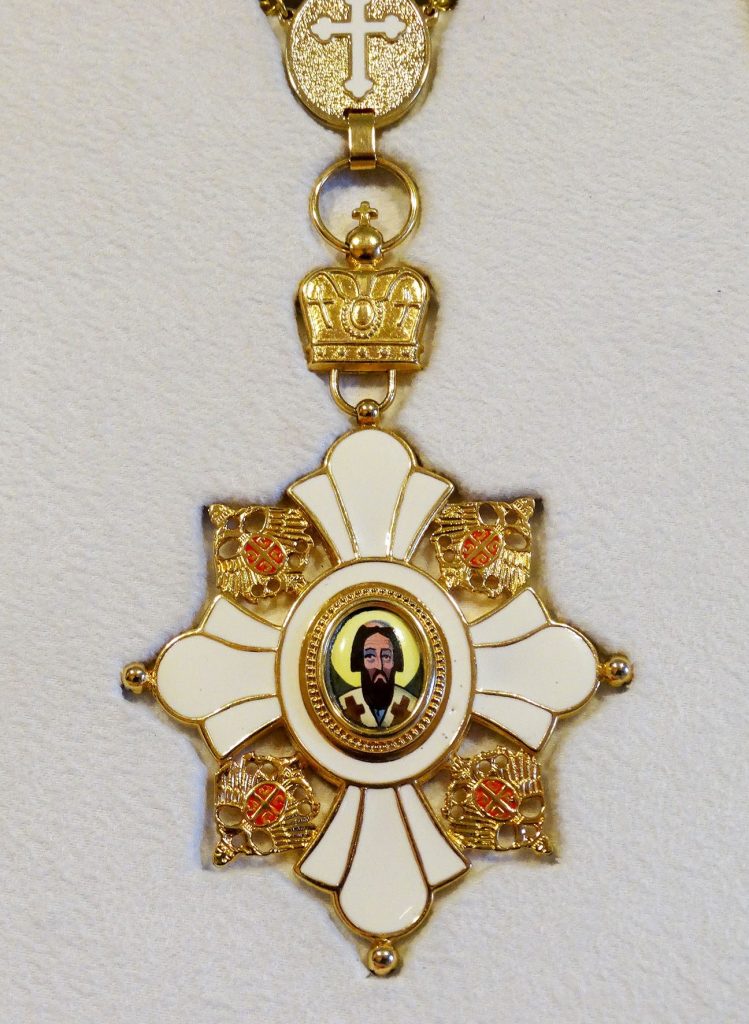
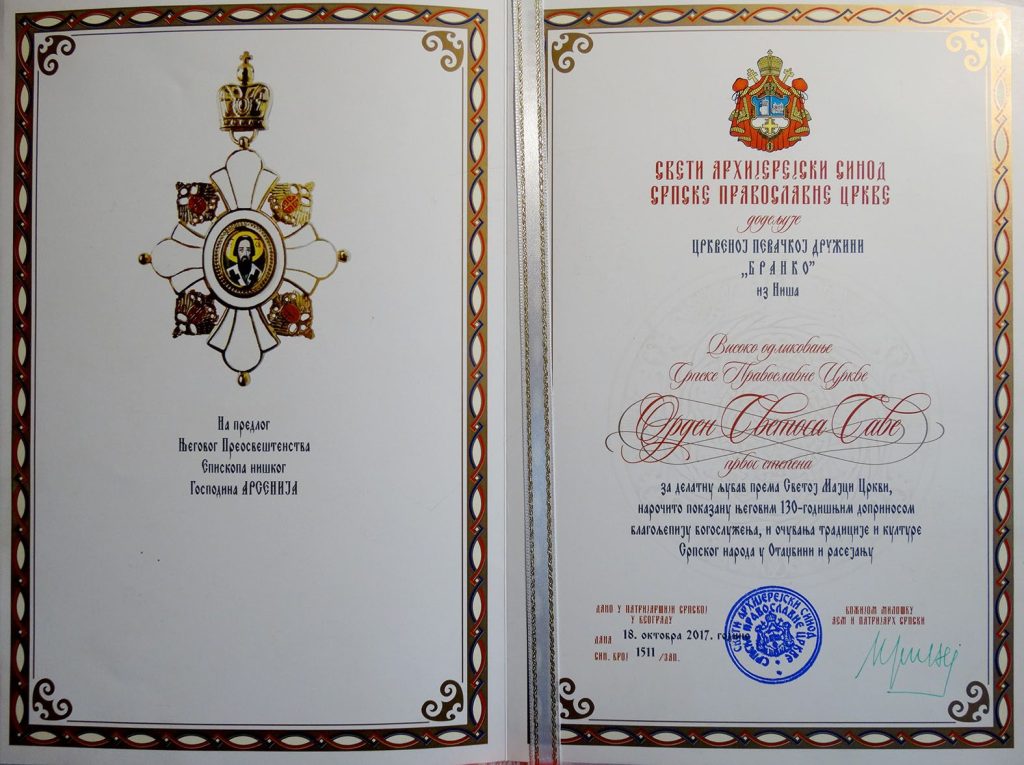
The Order of St Sava - all four classes
From the Society's archive
28 January 1895
In the long and rich history of the Niš Church Choral Society “Branko”, a special place belongs to an unusual event, almost unbelievable for its time. On 28 January 1895, the choir “Branko” took part in an extraordinary musical undertaking - a two-way telephone transmission of a concert between Niš and Belgrade.
At a time when the telephone was still a true technical marvel, audiences had the chance to hear a concert taking place simultaneously in two cities. The Church Choral Society “Branko” performed in Niš, while the Choral Society “Stanković” sang in Belgrade. The programme was transmitted over telephone lines, so listeners in one city could hear the performers in the other.
This unusual musical event was held in honour of Nikola Tesla and the spirit of technological progress that marked the end of the 19th century. For the audience of the time it was not just a concert but a true meeting of music and new science - proof that art and technical innovation can together push the boundaries of the possible.
By taking part in this event, the Choral Society “Branko” showed that already in the first decades of its existence it was part of the important cultural and social currents of its time. This episode remains one of the most fascinating stories in the Society's history - the story of a choir that, as early as the end of the 19th century, connected Niš and Belgrade with song, over the wire.
1945-1990.
After the Second World War, the Choral Society “Branko” remained almost entirely outside public cultural and concert life for more than four decades.
Yet the choir did not cease to exist.
While circumstances changed, “Branko” continued to sing at services in the Cathedral in Niš, preserving its tradition where it was born - in the church.
In the early 1990s, the choir returned to the concert stage and began a new chapter in its history.
In this way “Branko” preserved what matters most: continuity, identity and a song that did not fall silent even when it was far from the public eye.
Honorary members
The reputation of the Niš Church Choral Society “Branko” extended far beyond Niš. This is shown by the fact that its honorary and distinguished members included some of the greatest creators of Serbian culture.
Stevan Stojanović Mokranjac, Josif Marinković, Stanislav Binički, Aleksa Šantić and Branislav Nušić remain permanently linked by name with the history of “Branko”.
These were not merely famous names of their time - they were composers and writers who shaped Serbian culture. Their presence among the honorary members bears witness to the reputation “Branko” had gained already in the first decades of its existence.
The history of “Branko” has thus also become part of the history of Serbian music, literature and culture.
1938.
On the occasion of the Society's 50th anniversary in 1938, King Peter II Karađorđević became godfather to “Branko” and presented it with a new society flag. Three golden nails were set into the flagstaff - gifts from King Peter II, Queen Maria and Prince Regent Paul.
The flag has become one of the most precious symbols of the historical heritage of the Choral Society “Branko”.
1938 in A journey through time →1994. · 2010.
The Choral Society “Branko” had the honour of singing at the enthronements of two Serbian patriarchs at the Patriarchate of Peć - Patriarch Pavle in 1994 and Patriarch Irinej in 2010.
These events are among the most significant testimonies to the place the Society has earned in the spiritual life of the Serbian Orthodox Church.
Our Service in Song →